
Free Shipping on Orders over $100 🚚
Free Shipping on Orders over $100 🚚
Resupply on the JMT is about one thing:
Carrying the right amount of food between access points so your pack stays manageable and your energy stays consistent.
Most hikers use 2–4 resupplies. The best system is the one that keeps logistics simple and food predictable.
Small seasonal store inside Yosemite.
Limited selection
Best for 1–3 day top-off only
Not a full resupply stop
Most reliable and beginner-friendly resupply.
Store + hot food + showers
Easy shuttle access from trail
No mail drop required
Best for keeping logistics simple.
Optional mid-trail resupply.
Mail drop OR limited store food
Relaxed stop with meals + lake access
Less crowded than Reds Meadow
Good for breaking up long stretches.
Most hikers choose either MTR or Onion Valley, not both.
Classic mail-drop resupply.
Mail drop only (no store)
One of the most used JMT resupply points
Deep Sierra reset before final push
Best for:
Longer, fully planned itineraries
Low-decision, pre-packed food systems
Town resupply via Independence.
7–9 mile side hike off trail (Kearsarge Pass)
Full grocery access in town
No mail drop required
Best for:
Flexibility and fresh food variety
Hikers who don’t want strict mail planning
A simple baseline:
1.5–2 lbs of food per day per person
Typical segments:
Yosemite → Tuolumne Meadows: 3–4 days
Tuolumne → Reds Meadow/VVR: 5–7 days
Reds Meadow/VVR → Final resupply: 5–7 days
Final resupply → Whitney: 5–8 days
This is where most beginners get it wrong.
You’re not packing a grocery bag. You’re building repeatable daily fuel blocks.
Used at:
Muir Trail Ranch
Onion Valley Trailhead
Optional full town resupply near Red's Meadow Resort
Organize everything into daily packs:
Breakfast bag (oats, bars, coffee)
Lunch/snack bag (bars, nuts, tortillas, jerky)
Dinner bag (freeze-dried meals or instant meals)
👉 Repeat for each hiking day (Day 1–6, Day 7–12, etc.)
5–8 days of food total
2,500–4,000+ calories per day
High-fat / high-calorie foods (nuts, nut butter, oils)
Electrolytes + coffee
1–2 “extra snack” buffers per day
Key idea:
You are packing daily fuel blocks, not random food.
Used at:
Tuolumne Meadows
This is a correction stop, not a full system reset.
1–3 days of food max
Zero-prep, high-calorie snacks
Bars + trail mix
Candy / quick sugar
Electrolytes
Instant meals if available
Full meal planning
Store being fully stocked
Precise calorie matching
A mail drop = food you pack at home and ship ahead.
Pack food into labeled bags
Put into a box
Ship to resupply location
Pick up mid-trail and reorganize
Freeze-dried meals
Oatmeal / instant breakfasts
Bars, trail mix, nuts
Tortillas, cheese, cured meats
Coffee, electrolytes
Fresh food (spoils)
Liquids or messy foods
Fragile chips (unless heavily padded)
Fuel or pressurized containers
Anything needing refrigeration
Packing too much food early “just in case”
Overcomplicating mail drops instead of using store stops
Underestimating appetite increase after day 3
Treating resupply like logistics instead of calorie planning
Start in Yosemite Valley
Tuolumne Meadows top-off
Red's Meadow Resort full resupply
Optional final resupply:
Muir Trail Ranch or
Onion Valley Trailhead
Resupply success is not about planning more.
It’s about:
Consistent calories
Simple organization
No decision fatigue on trail
If you can open your food and immediately know what to eat for the next few days, your system is working.
Planning your John Muir Trail hike? We made a curated JMT Gear Collection with packs, footwear, water filters, bear canisters, layers, and trail-tested essentials to help simplify your kit.
Shop Our JMT Gear CollectionRelated Eastside Sports JMT Guides
JMT Permits Explained Best Shoes for the JMT First Time JMT Mistakes JMT Resupply Guide

June 29, 2026 6 min read
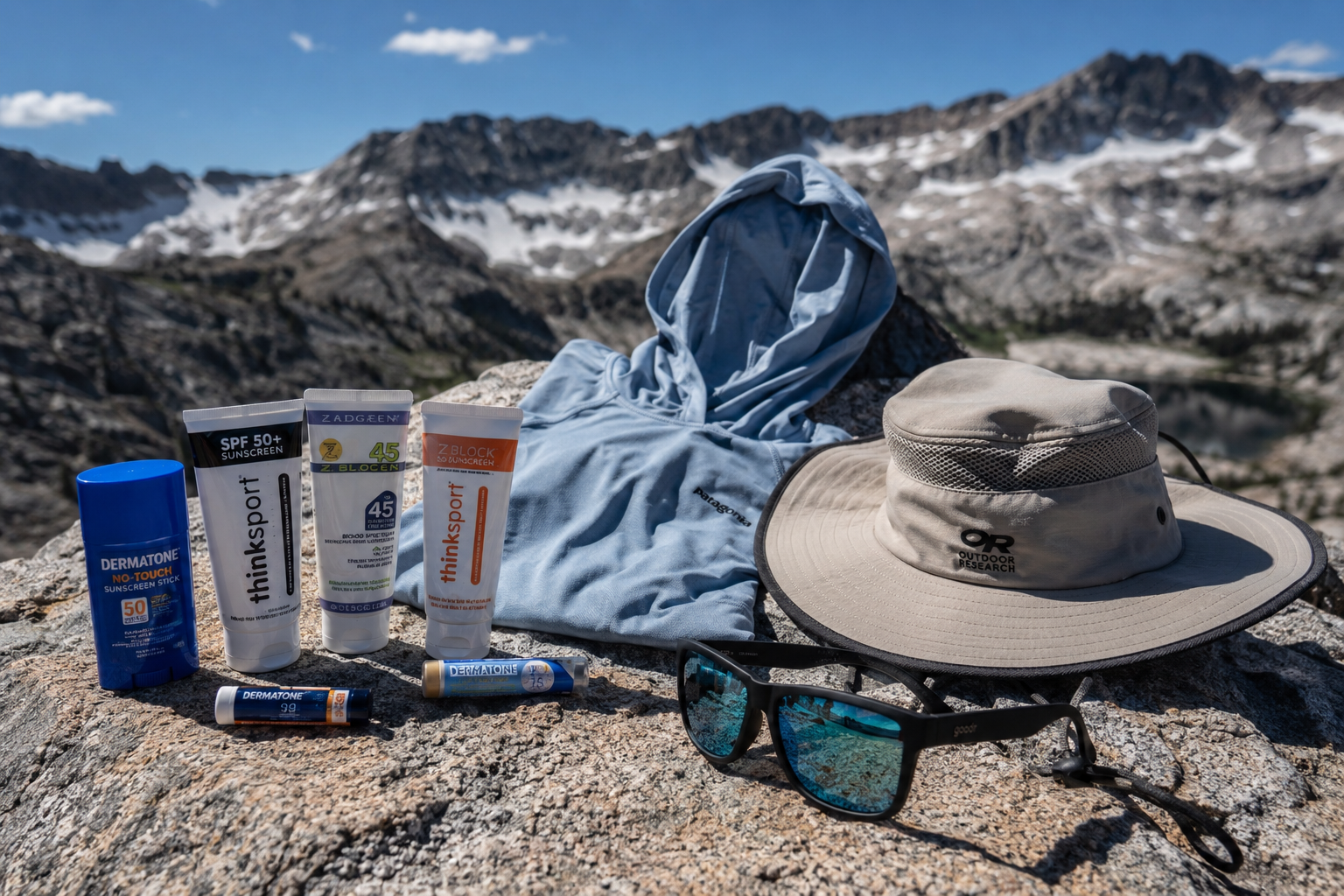
Summer in the Sierra demands more than sunscreen—it requires a layered sun system. This guide breaks down SPF vs UPF, explains UVA/UVB exposure at altitude, and shows how to build a complete protection kit using sunscreen, sun hoodies, hats, lip balm, and sunglasses for high-elevation environments.

April 28, 2026 5 min read
Read More

April 11, 2026 10 min read
What happens when a complete beginner accidentally commits to hiking the John Muir Trail? Overpacking, poor decisions, unexpected friendships, and 200+ miles of figuring it out the hard way. Read a first-timer's John Muir Trail story packed with real mistakes, lessons, and gear insights. Follow a beginner’s journey through Yosemite to Mount Whitney while learning what it actually takes to hike the JMT—from preparation and permits to daily mileage, gear choices, and surviving the Sierra.
Sign up for the latest on area events and conditions, sales/promotions, new releases, and so much more…
You get a code for free standard shipping on an order over $20 after sign up! Check your email!