
Free Shipping on Orders over $100 🚚
Free Shipping on Orders over $100 🚚
Food on the John Muir Trail is simple in theory and weirdly complicated in practice.
You’re trying to balance three things at once:
Calories (you’ll burn a lot more than you think)
Weight (you’ll regret every extra ounce by mile 80)
Enjoyment (because eating the same sad meal 10 times straight gets old fast)
This guide breaks down how to actually plan food for the JMT without overthinking it.
On the JMT, your body is basically a furnace.
Most hikers land somewhere around:
3,000–5,000 calories/day
Higher end if you’re big, fast, or cold-hiking
Lower end if you’re smaller or pacing slowly
The mistake most first-timers make: packing “normal hiking food” instead of calorie-dense food.
You’re not eating healthy. You’re eating efficiently.
Think:
nuts, oils, cheese, tortillas
dehydrated meals
bars that are basically candy with branding
A good target:
1.5 to 2 lbs of food per day
That usually gives you:
enough calories
not absurd pack weight
Example:
10-day section = ~15–20 lbs of food at the start
Yes, it feels heavy. Yes, it gets lighter very fast.
Instead of obsessing over macros, most JMT hikers split food like this:
You want something you can eat half-awake in cold air.
Good options:
Instant oats + peanut butter
Granola + powdered milk
Breakfast bars + coffee
Tip: Don’t get fancy here. You will not care by day 4.
Lunch should be stove optional.
Good options:
Tortillas + tuna packets + olive oil
Bagels + peanut butter
Salami + cheese wraps
Easy "just add water" dehyrated meals
This is your “walk and eat” food.
If you're in for a more relaxing lunch experience, busting out the stove and making a quick dehyrdrated meal is totally cool too.
Dinner is your psychological recovery tool.
Good options:
Freeze-dried meals with customizations (Mountain House style)
Delectable treats like hot cocoa with Fireball
Rice + add-ins (tuna, olive oil, seasoning packets)
Mashed potatoes made with your leftover ramen broth and bacon bits and fried onions
Pro move: add olive oil to everything. It’s the easiest calorie boost on trail.
These are the quiet heroes of JMT food systems:
Peanut butter
Olive oil packets
Nuts (almonds, cashews, walnuts)
Chocolate / candy (yes, really)
Cheese (like Babybel)
Tortillas (don’t crush like bread)
If your food bag is missing calories, it will show up in your mood before your mileage.
Snacking is not optional on the JMT.
Good trail snacks:
Trail mix (make your own if possible)
Energy bars
Gummies / sour candy (fast sugar hits actually help late day)
Jerky
Electrolyte mixes
If you wait until you feel hungry, you waited too long.
Most hikers use a mix of:
Muir Trail Ranch (MTR)
Vermilion Valley Resort (VVR)
Reds Meadow / Mammoth Lakes
Tuolumne Meadows Store (sometimes)
Basic rule:
Don’t overpack early sections
Don’t under-pack high-mileage or high exertion stretches (like Whitney push & the golden staircase)
If you want simplicity, build your food around 3–4 resupplies max.
You will not care about quinoa on day 7.
Fat = calories + endurance stability
Ironically, too many different meals creates decision fatigue.
Crunchy + soft + chewy matters more than people think over 10+ days.
At altitude + fatigue, your appetite will swing wildly.
Not perfect, just realistic:
Breakfast
Oatmeal + peanut butter + coffee
Lunch
Tortilla + tuna + olive oil + snack bar
Snacks
Boatloads. Trail mix + candy + jerky
Dinner
Freeze-dried meal + olive oil + hot drink
Repeat. Adjust slightly for morale.
On the JMT, food isn’t about enjoyment optimization. It’s about keeping your engine running long enough to enjoy everything else.
If you get it mostly right:
you feel steady energy
recovery is decent
morale holds up
If you get it wrong:
everything feels harder than it should
Keep it calorie-dense, simple (but not too simple), and repeatable. The trail will handle the rest.
Planning your John Muir Trail hike? We made a curated JMT Gear Collection with packs, footwear, water filters, bear canisters, layers, and trail-tested essentials to help simplify your kit.
Shop Our JMT Gear CollectionRelated Eastside Sports JMT Guides
JMT Permits Explained Best Shoes for the JMT First Time JMT Mistakes JMT Resupply Guide

June 29, 2026 6 min read
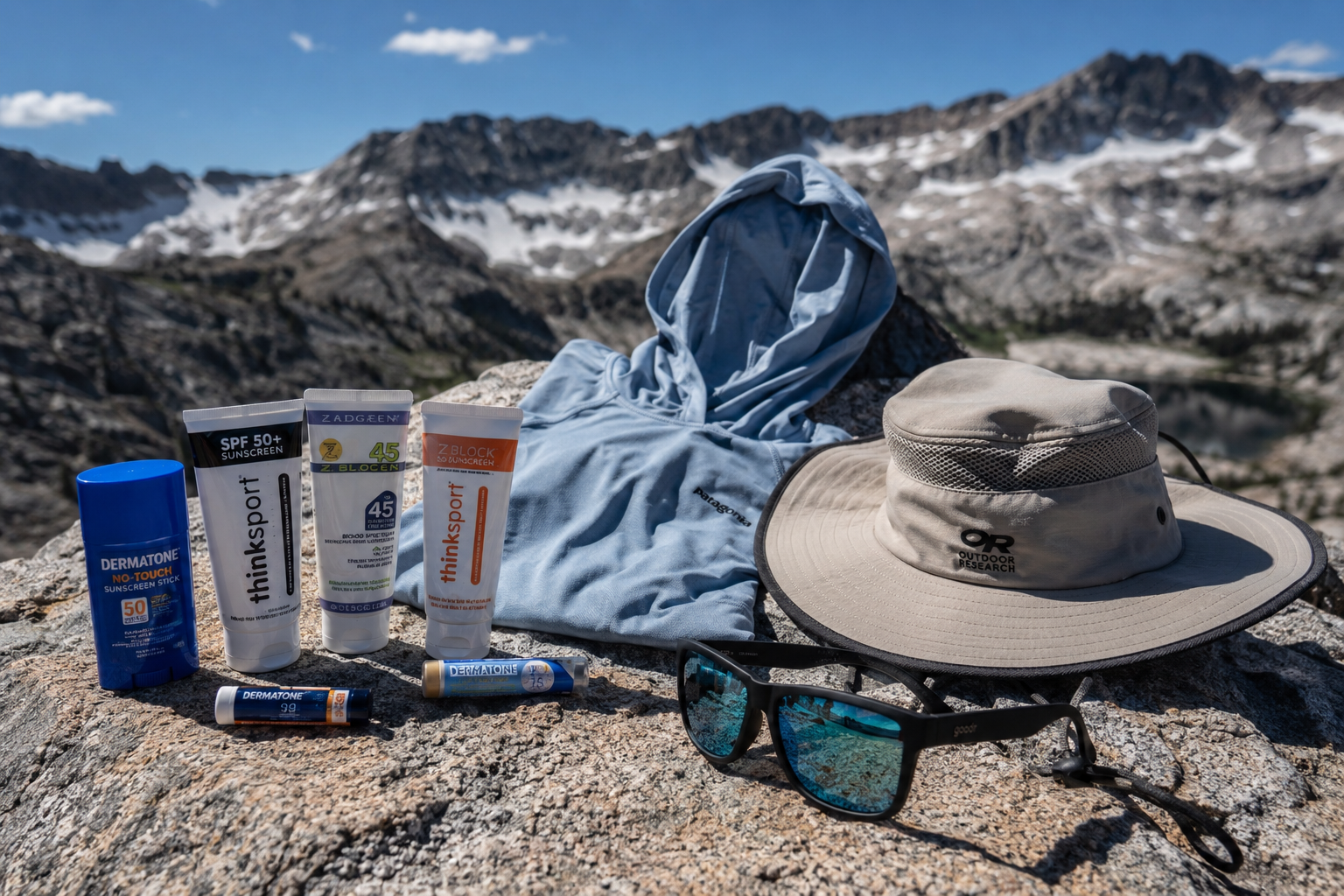
Summer in the Sierra demands more than sunscreen—it requires a layered sun system. This guide breaks down SPF vs UPF, explains UVA/UVB exposure at altitude, and shows how to build a complete protection kit using sunscreen, sun hoodies, hats, lip balm, and sunglasses for high-elevation environments.

April 28, 2026 5 min read
Read More

April 11, 2026 10 min read
What happens when a complete beginner accidentally commits to hiking the John Muir Trail? Overpacking, poor decisions, unexpected friendships, and 200+ miles of figuring it out the hard way. Read a first-timer's John Muir Trail story packed with real mistakes, lessons, and gear insights. Follow a beginner’s journey through Yosemite to Mount Whitney while learning what it actually takes to hike the JMT—from preparation and permits to daily mileage, gear choices, and surviving the Sierra.
Sign up for the latest on area events and conditions, sales/promotions, new releases, and so much more…
You get a code for free standard shipping on an order over $20 after sign up! Check your email!