
Free Shipping on Orders over $100 🚚
Free Shipping on Orders over $100 🚚
If you’re planning to hike the John Muir Trail, you don’t need to become a professional athlete. You do need to become someone your body can trust to walk uphill for days in a row, carry a pack, recover overnight, and do it again.
That’s the real job of training.
Most people overcomplicate this. They chase intensity, gym numbers, or random fitness plans that don’t translate to trail life.
This is simpler than that.
The JMT is less about peak fitness and more about repeatable output.
On trail, you’re typically:
That repeated cycle is the entire challenge.
So your training should build:
You’re not training for one hard day. You’re training for 20+ moderate ones.
If you only do one thing, do this consistently.
Start walking. A lot.
3–5 days per week is ideal. It doesn’t need to be complicated:
Once a week, build in a longer effort:
The goal isn’t speed. It’s time on feet without breaking down.
A simple check I use with athletes:
If you finish a long hike and feel like you’re completely destroyed for multiple days, the volume (time on feet/distance) is too high.
We want stressed, not shattered.
Hiking without weight and hiking with a loaded pack are different sports.
Your body needs time to adapt to:
Start lighter than you think:
Progress gradually. The mistake people make here is jumping straight to “trail weight” too early and irritating knees, hips, or feet before they’ve adapted.
This is tendon and joint training, not just cardio.
You do not need a bodybuilding program.
Two sessions per week is enough, focused on:
The goal is durability, not exhaustion.
If you’re too sore to hike the next day, the training is working against you.
Most people train uphill and ignore downhill.
On the JMT, downhill is where fatigue and knee stress accumulate.
If you can, include:
Downhill conditioning is what keeps people moving comfortably late in the trip.
Once every week or two, try this:
The purpose isn’t performance. It’s adaptation.
You’re teaching your body to function while already fatigued — which is exactly what happens on the trail.
Training isn’t just physical.
Practice eating and drinking like you will on trail:
A lot of “I felt terrible on climbs” stories are actually just under-fueling in disguise. On trail, it's not about protein, its about calories and carbs! Ensure the snacks you're consuming on trail are carb focused. When I hiked the JMT, I was consuming about 40g of carbs per hour.
Most issues come from a few predictable patterns:
Consistency beats intensity almost every time here.
You don’t need to feel unstoppable.
You’re ready when:
That’s enough.
This guide is intentionally general — it’s meant to give you the framework and a clear understanding of what actually matters when training for the JMT.
If you want something more dialed, including:
We’ve put together a full JMT Training Plan from our personal trainer Jake, built from years of coaching experience in the fitness industry and hands-on experience preparing hikers for long-distance trips.
It’s designed for people who don’t want to guess, overthink, or stitch together random advice.
Download the JMT Training Plan → Jake’s JMT Training Plan
*This content is intended for general educational purposes. Train responsibly and adjust based on your individual fitness level or any existing injuries.*
Planning your John Muir Trail hike? We made a curated JMT Gear Collection with packs, footwear, water filters, bear canisters, layers, and trail-tested essentials to help simplify your kit.
Shop Our JMT Gear CollectionRelated Eastside Sports JMT Guides
JMT Permits Explained Best Shoes for the JMT First Time JMT Mistakes JMT Resupply Guide

June 29, 2026 6 min read
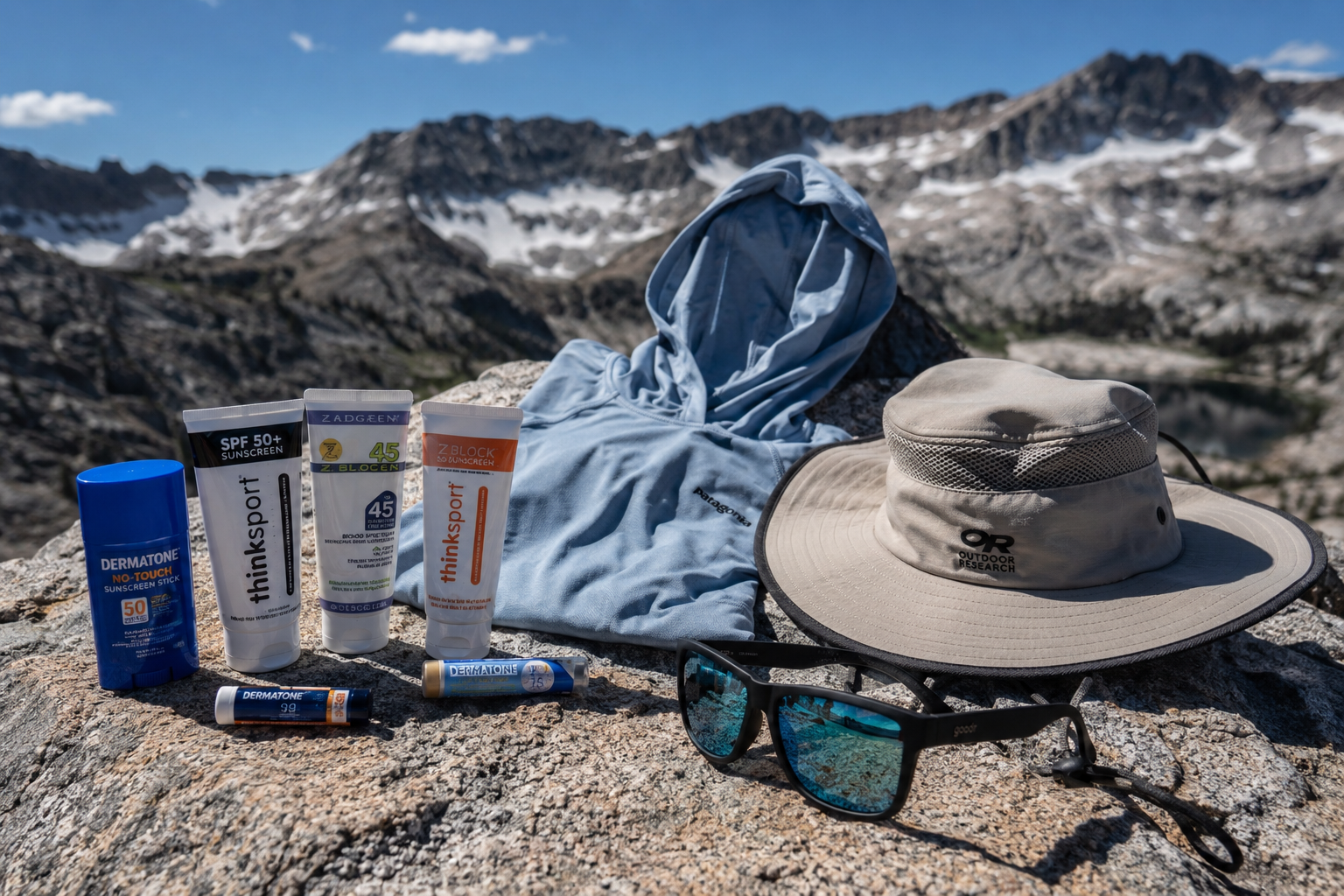
Summer in the Sierra demands more than sunscreen—it requires a layered sun system. This guide breaks down SPF vs UPF, explains UVA/UVB exposure at altitude, and shows how to build a complete protection kit using sunscreen, sun hoodies, hats, lip balm, and sunglasses for high-elevation environments.

April 28, 2026 5 min read
Read More

April 11, 2026 10 min read
What happens when a complete beginner accidentally commits to hiking the John Muir Trail? Overpacking, poor decisions, unexpected friendships, and 200+ miles of figuring it out the hard way. Read a first-timer's John Muir Trail story packed with real mistakes, lessons, and gear insights. Follow a beginner’s journey through Yosemite to Mount Whitney while learning what it actually takes to hike the JMT—from preparation and permits to daily mileage, gear choices, and surviving the Sierra.
Sign up for the latest on area events and conditions, sales/promotions, new releases, and so much more…
You get a code for free standard shipping on an order over $20 after sign up! Check your email!