
Free Shipping on Orders over $100 🚚
Free Shipping on Orders over $100 🚚
If the standard Mount Whitney Trail is a long hike, the Mountaineer's Route is a mountaineering objective.
The route is shorter in mileage, but significantly more demanding. Once you factor in winter conditions you're dealing with a completely different experience than a summer Whitney summit.
This is not the route most people should choose for their first winter mountain. It requires comfort with snow travel, steep terrain, route finding, and winter decision-making.
For those with the skills and experience, however, it is one of the most rewarding alpine climbs in California.
Here is what you should know before attempting a winter summit via the Mountaineer's Route.
The Mountaineer's Route follows the North Fork of Lone Pine Creek rather than the standard Mount Whitney Trail.
Instead of long switchbacks and a well-defined trail, you get:
Steeper terrain
More route-finding challenges
Snow travel for much of the route
Sections that require mountaineering skills
Greater consequences for mistakes
The route gains elevation quickly and feels much more alpine from the start.
Many experienced hikers are surprised by how different the mountain feels once they leave the standard switchbacks.
Unlike the standard Mount Whitney Trail, there is no single "normal" way to climb the Mountaineer's Route.
Many experienced climbers complete the route as a long day push, often starting sometime between midnight and 3:00 AM. The advantage is a lighter pack and less overnight gear, but it also means combining route finding, snow travel, altitude, and the entire descent into one very long day.
Others prefer an overnight approach, typically camping near Lower Boy Scout Lake, Upper Boy Scout Lake, or Iceberg Lake. This allows climbers to split up the elevation gain and begin summit day closer to the technical portions of the route.
Neither approach is inherently better. Strong climbers often prefer the efficiency of a day push, while many first-time Mountaineer's Route climbers appreciate the flexibility and reduced summit-day workload that comes with camping.
The most important factor is being realistic about your pace. Winter travel is often slower than expected, and snow conditions can dramatically change how long the route takes.
The biggest mistake people make is looking at the Mountaineer's Route as simply a harder version of Whitney.
Winter fundamentally changes the climb.
Snow conditions can vary dramatically from one week to the next:
Firm snow that supports fast travel
Deep unconsolidated powder
Wind-loaded slopes
Ice-covered sections
Mixed rock and snow terrain
A route that feels straightforward in one condition can become significantly more serious in another.
Always evaluate current conditions rather than relying on old trip reports.
The Mountaineer's Route can become especially tricky during the shoulder seasons of late fall and spring.
These periods often bring a mix of snow, ice, exposed rock, and rapidly changing conditions. A route that looks straightforward from a distance may involve firm snow in one section, loose rock in another, and icy terrain higher up.
Generally speaking, spring ascents are far more common due to more predictable snowpack and conditions.
Many climbers find shoulder season conditions harder to plan for than full winter conditions because the mountain can change dramatically from week to week. Always check recent trip reports, weather forecasts, and current conditions before your climb, and be prepared for a wide range of terrain and temperatures.
Unlike the standard trail, there is no obvious path waiting for you.
Tracks may exist.
Tracks may disappear.
Tracks may lead somewhere you do not want to go.
Winter climbers need to be comfortable with:
Navigation in snow-covered terrain
Reading terrain features
Identifying safe ascent routes
Adjusting plans when conditions change
The mountain does not care whether a bootpack exists.
For many winter ascents, the main chute becomes the defining feature of the route.
Depending on conditions, it can involve:
Sustained steep snow climbing
Hard-packed snow
Ice
Significant fall consequences
This is where proper technique matters.
A slip on steep terrain is very different from a stumble on a hiking trail.
Before attempting the route, climbers should already be comfortable using:
Crampons
Ice axe
Self-arrest techniques
Steep snow climbing techniques
The Mountaineer's Route is not the ideal place to learn these skills for the first time.
Many climbers focus heavily on technical difficulty and underestimate weather.
Winter storms can bring:
Whiteout conditions
Extreme wind
Rapid temperature changes
Deep snow accumulation
Dangerous visibility issues
Even experienced climbers turn around because of weather.
In many cases, good judgment means recognizing when summit plans no longer make sense.
Winter does not make Whitney any lower.
You are still climbing above 14,000 feet.
Altitude issues become even harder to manage when combined with:
Cold temperatures
Heavy packs
Increased physical effort
Winter travel conditions
If possible, spend time at elevation before your climb.
Even a day spent around Whitney Portal, Horseshoe Meadows, or other high-elevation areas can help reduce the shock of going straight from low elevation to summit day.
Fitness is important.
Proper equipment is mandatory.
Typical winter gear considerations include:
Mountaineering boots
Crampons
Ice axe
Helmet
Insulating layers
Wind protection
Emergency equipment
Navigation tools
Gear should be familiar long before summit day.
A winter ascent is not the place to learn how your equipment works.
One of the hardest lessons in mountaineering is understanding that a turnaround is not a failure.
The summit will still be there.
Conditions can improve.
Skills can improve.
Experience can improve.
Many successful mountaineers have a long list of mountains they did not summit on their first attempt.
The goal is not simply reaching the top.
The goal is coming home with a good story and the ability to climb another day.
Absolutely.
For experienced climbers, it is one of the most classic alpine routes in the Sierra Nevada.
The combination of winter conditions, steep snow climbing, and the highest summit in the contiguous United States creates an experience that feels dramatically different from the standard Whitney Trail.
But it deserves respect.
The climbers who tend to have the best experience are not necessarily the strongest. They are the ones who understand the conditions, carry the right gear, make good decisions, and are willing to turn around when the mountain says no.
Planning your Mt Whitney adventure? We made a curated Whitney Gear Collection with the essentials you'll need to conquer the highest peak in the lower 48.
Shop Mt. Whitney Gear Collection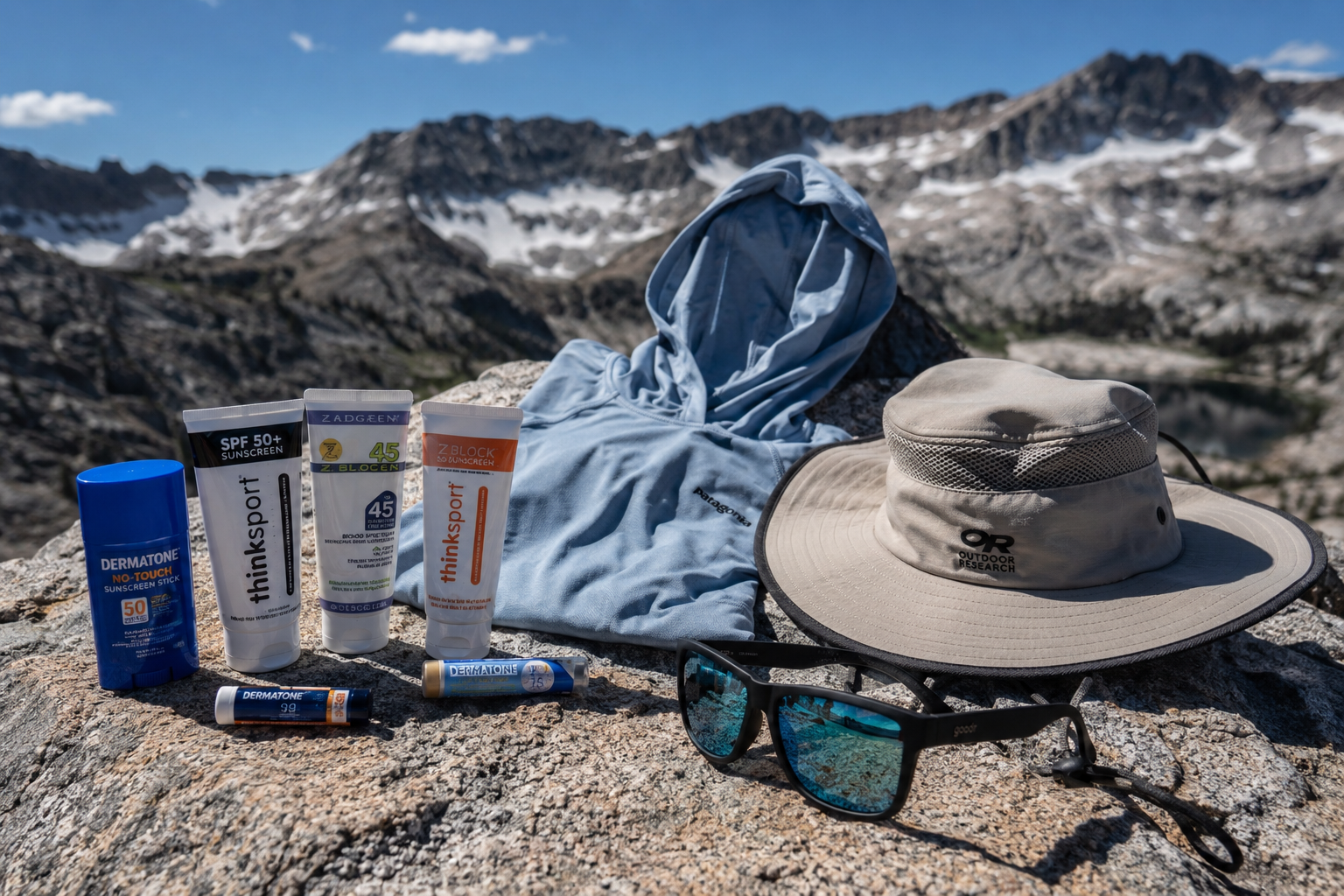

June 29, 2026 6 min read
Summer in the Sierra demands more than sunscreen—it requires a layered sun system. This guide breaks down SPF vs UPF, explains UVA/UVB exposure at altitude, and shows how to build a complete protection kit using sunscreen, sun hoodies, hats, lip balm, and sunglasses for high-elevation environments.

April 28, 2026 5 min read
Read More

April 11, 2026 10 min read
What happens when a complete beginner accidentally commits to hiking the John Muir Trail? Overpacking, poor decisions, unexpected friendships, and 200+ miles of figuring it out the hard way. Read a first-timer's John Muir Trail story packed with real mistakes, lessons, and gear insights. Follow a beginner’s journey through Yosemite to Mount Whitney while learning what it actually takes to hike the JMT—from preparation and permits to daily mileage, gear choices, and surviving the Sierra.
Sign up for the latest on area events and conditions, sales/promotions, new releases, and so much more…
You get a code for free standard shipping on an order over $20 after sign up! Check your email!