If you’re hiking Mount Whitney in the summer, you’re getting the simplest version of the mountain, but that doesn't mean it's easy. Summer just means the route is mostly clear of snow and the logistics are simpler. Everything else still feels like high altitude hiking once you’re actually on it.
Most people underestimate Whitney in summer because it looks like a long trail hike on paper. In reality, you’re dealing with altitude, exposure, pacing, sun, and a very long day that does not give you many places to recover if you fall behind.
We're gonna tell you what matters for a good Whitney experience.
Summer usually runs from late June through September, but conditions vary year to year depending on snowpack.
By mid to late summer, you typically get:
A fully snow-free main trail
Clear route finding with no technical terrain
Open access all the way to Trail Crest and the summit ridge
What people do not always expect:
The trail feels hotter than forecast temperatures suggest
Wind picks up near the crest even on calm mornings
Afternoon thunderstorms can build quickly over the Sierra without warning
It is a “safe” season, but not a comfortable one.
In summer, Whitney stops being about navigation or gear complexity and becomes about three things:
Pacing at altitude
Managing energy over a very long climb
Timing your summit so you are not descending in bad weather or darkness
Most people who struggle underestimate altitude and pack/plan poorly.
A proper summer Whitney day almost always starts before sunrise.
Typical start times:
2:00 to 4:00 AM for day hikers
Pre-dawn starts for overnight hikers pushing summit day
Why? You're trying to be below Trail Crest again before afternoon conditions develop.
The key timing zones:
Before sunrise: cold but efficient hiking conditions
Morning: best climbing window, steady rhythm
Late morning: fatigue starts to show
Early afternoon: weather and energy both become less predictable
If you are still climbing towards the summit after 12:00, you are usually behind schedule and should turn around.
Hiking Mount Whitney will take longer than you think. The hike is long, at altitude and has several sets of absolutely mind-numbing switchbacks.
If your normal pace is 2 miles per hour, count on 1 to 1.5 miles pert hour on Mount Whitney. Meaning, you will not take 11 hours for the round trip, but 15 to 22.
When you give your loved ones at home an estimated return time, let them know not to call for search & rescue immediately but wait until you're several hours overdue.
Whitney exposes fast starters.
At altitude, you do not get rewarded for speed early. You get punished for it later.
What actually works:
Start slower than you think you need to
Keep breathing controlled even when the trail feels easy
Take short, frequent breaks instead of long stops (and drink plenty of water)
Eat early, not when you feel tired
Whitney is more about pacing and patience than fitness.
Summer gear on Whitney is all about keeping you protected from the elements, keeping you fed, hydrated, and as comfortable as possible.
The biggest priorities:
Sun protection a lot:
Hat with full coverage and/or sun hoodie
Sunglasses you can wear all day
Sunscreen you actually reapply
Temperature management is mostly layering:
Insulation for early morning start & chillin' on the summit
Breathable & wicking layers for mid-day heat
A rain layer for the windy crest and odd rain storms
Other non-negotiables:
Headlamp you trust in full darkness (y'all, please make sure it's fully charged).
Enough water capacity for long dry sections (we recommend 1.5-2L) and a water filter. From Trail Camp to the summit and back, the trail covers 7 miles with no water source
Trekking poles for the descent, which is where most fatigue shows up
A lot of Whitney “gear problems” are actually hydration and sun exposure problems. And don't forget about bugs! Consider some bug spray for hikes between late June and early August.
Even in summer when everything feels accessible, altitude is still the biggest factor on Mount Whitney.
What makes it tricky is that it might now hit you immediately. Altitude has a delay-effect, which means even if you felt somewhat fine at the summit, you might get really altitude sick on the way down. Therefore, it is very important to turn around at the first sign of altitude sickness. Don't keep ascending! The only cure for it is descent!!
Most rescues due to altitude related illness happen for people who have pushed it too far and are on their way down between Trail Camp and Outpost Camp - well below the summit.
What helps more than anything:
Stay steady from the start instead of surging
Sip water before you feel behind on hydration. Altitude dries you out more than people realize
Eat small amounts consistently instead of big breaks and stick to light food low in fats
Accept that breathing will feel harder than expected
If you have not spent much time at elevation recently, this matters even more.
One of the most underrated things you can do is arrive a day early and spend time higher up before your hike. Even just sleeping and/or spending time between 9-11k feet at places like Whitney Portal, Horseshow Meadows or Onion Valley the day before helps your body adjust a bit. We recommend spending time at the above elevation range and moving your body normally the day before; train high, sleep low.
This strategy is not full acclimatization, but it does take the edge off that sudden jump from sea level to high altitude and can make the climb feel noticeably more manageable. Doing this could give you a 10-25% improvement in how you feel on your summit day.
Most people skip this step because they are trying to maximize time or minimize cost, but it is one of those small decisions that can genuinely improve your odds of not getting AMS or at least dealing with altitude effects better.
Summer Whitney usually follows a pattern that is predictable enough to plan around if you respect it.
Most days look like:
Clear morning start
Stable mid-morning conditions
Gradual cloud buildup near the crest
Possible thunderstorms in the afternoon
No need to panic. You just need to plan around it. This means even if the forecast shows no precipitation, bring a rain jacket. Emergency ponchos might be tempting due to their low weight, but they rip instantly in the first breeze.
A good rule:
If you hear thunder or see vertical cloud buildup over the range, you should descend immediately. Chances are nobody is coming to save you in those conditions.
You don't want to end up on Inyo SAR's Instagram! The local search & rescue team is very busy on Mount Whitney - usually for the same couple of reasons.
How to avoid the most common causes for rescue:
Inyo County, which is where Mt Whitney is located at, is extremely rural and it takes the SAR team hours just to arrive at the trailhead, then a lot more hours to reach you.
Read more in our guide on how to avoid getting rescued in Mount Whitney, and the tips by Inyo County Search & Rescue.
Summer is popular for a reason:
No snow navigation in most years
Clear trail the entire way
Long daylight hours
Simplified logistics
But that also means:
Heavy traffic on popular permit days
Crowded pre-dawn starts
Full camps at Trail Camp and Outpost Camp
A lot of inexperienced hikers on the same route
Summer Whitney removes technical barriers, but the endurance demands remain.
You are still dealing with:
6,400 plus feet of elevation gain
Long sustained hiking above 12,000 feet
A summit environment with real exposure
A very long descent when your legs are already fatigued
The hikers who have a good experience are usually not the fittest ones. They are the ones who pace it right, manage their energy, and respect the altitude from the beginning. Happy trails!
Planning your Mt Whitney adventure? We made a curated Whitney Gear Collection with the essentials you'll need to conquer the highest peak in the lower 48.
Shop Mt. Whitney Gear Collection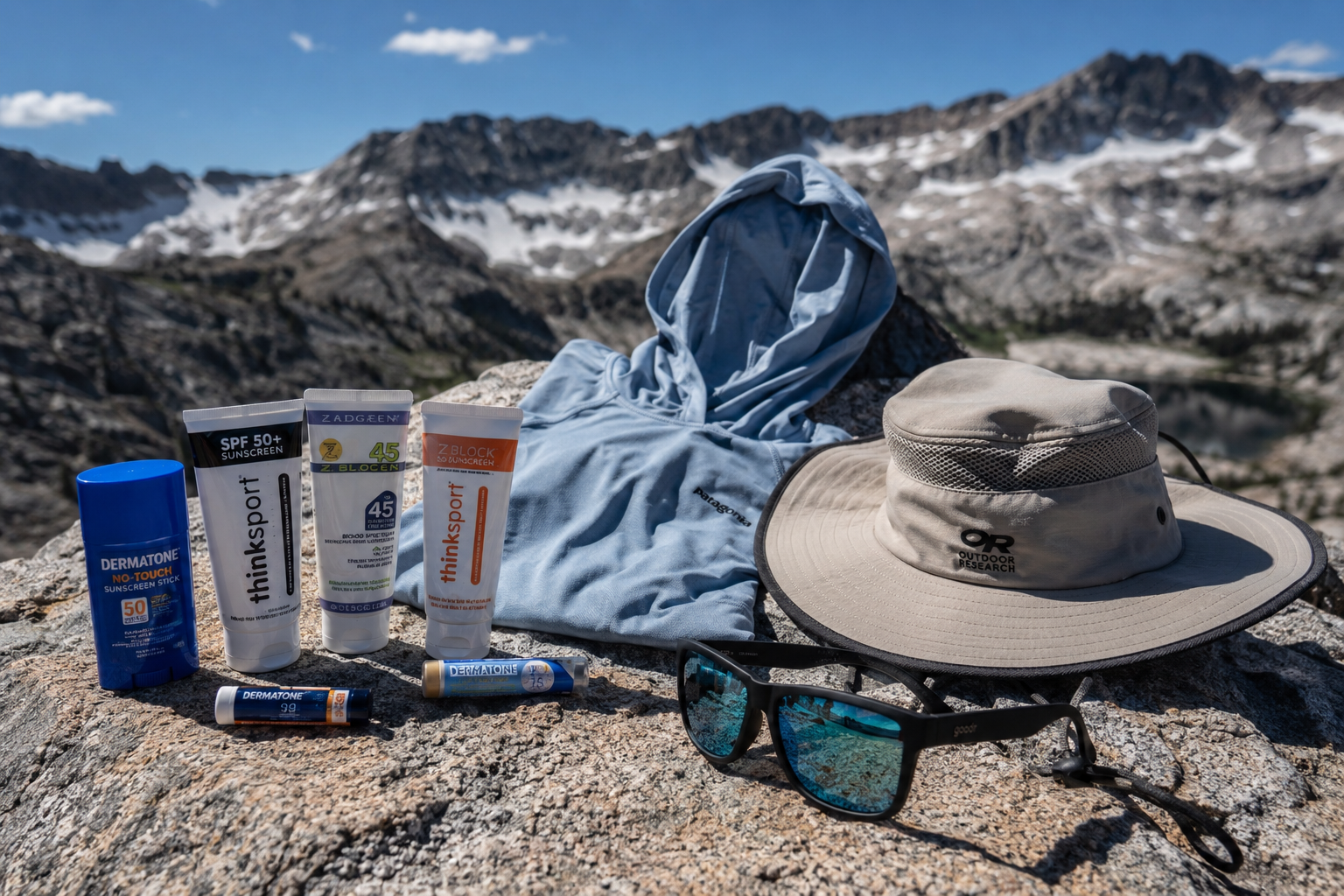

Summer in the Sierra demands more than sunscreen—it requires a layered sun system. This guide breaks down SPF vs UPF, explains UVA/UVB exposure at altitude, and shows how to build a complete protection kit using sunscreen, sun hoodies, hats, lip balm, and sunglasses for high-elevation environments.


What happens when a complete beginner accidentally commits to hiking the John Muir Trail? Overpacking, poor decisions, unexpected friendships, and 200+ miles of figuring it out the hard way. Read a first-timer's John Muir Trail story packed with real mistakes, lessons, and gear insights. Follow a beginner’s journey through Yosemite to Mount Whitney while learning what it actually takes to hike the JMT—from preparation and permits to daily mileage, gear choices, and surviving the Sierra.